
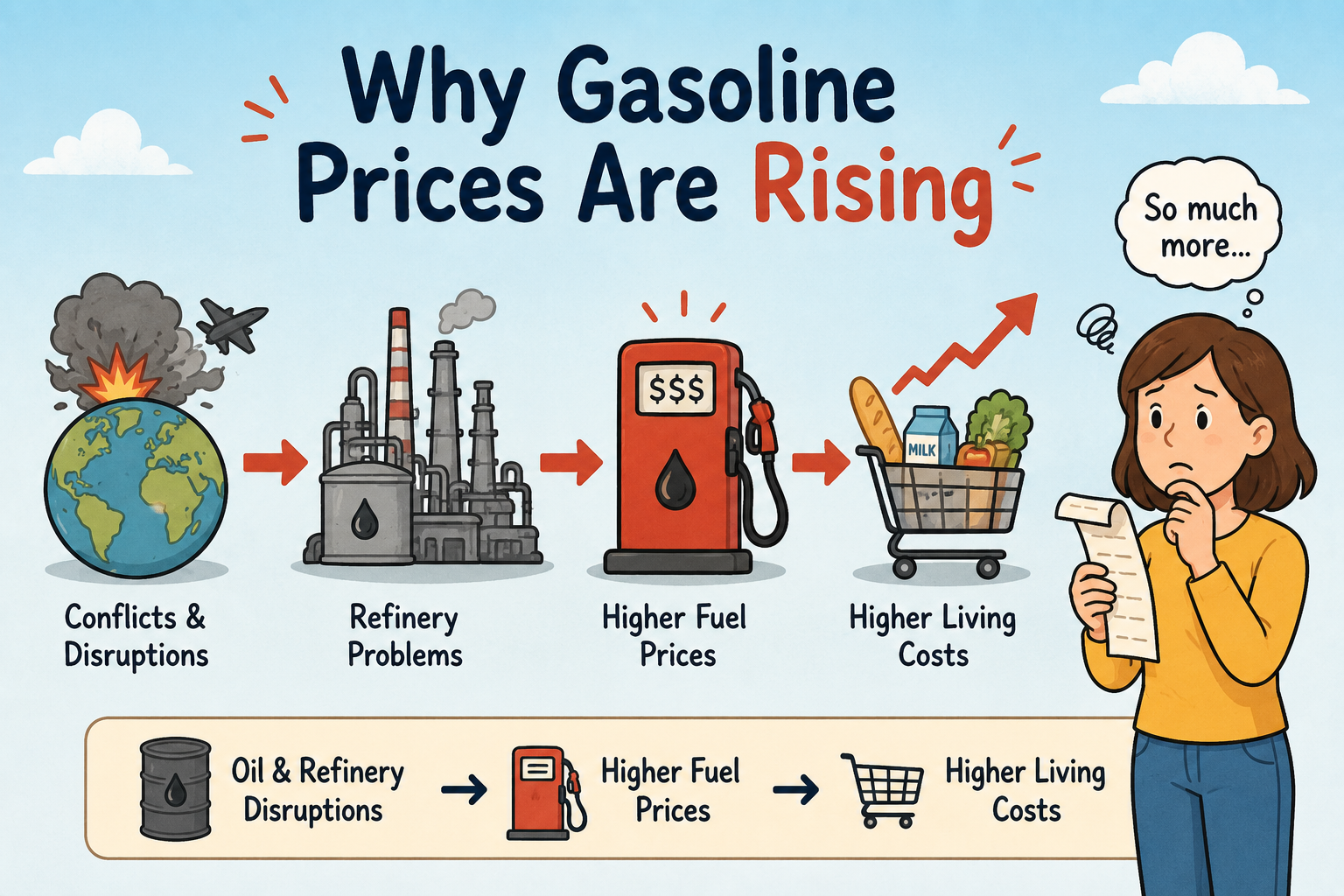
Gasoline prices are climbing again as global conflicts and refinery disruptions put pressure on fuel supplies. Here’s why it matters — not just at the pump, but for the everyday cost of living.
Why Are Gasoline Prices Rising?
The first reason is higher crude oil prices.
Wars and geopolitical tensions, particularly in the Middle East, have disrupted oil production, refinery operations and important shipping routes. When markets worry that less oil will reach the global market, prices can rise quickly.
But crude oil is only part of the story.
Oil must first be processed in refineries before it becomes gasoline or diesel.
Recent conflicts have increasingly affected these facilities as well. The war in Ukraine has affected Russian refining capacity, while conflict in the Middle East has disrupted refining operations and exports of petroleum products.
This matters because having enough crude oil does not necessarily mean having enough gasoline.
If refineries cannot operate normally, the supply of gasoline and diesel can remain tight — even when crude oil itself is available.
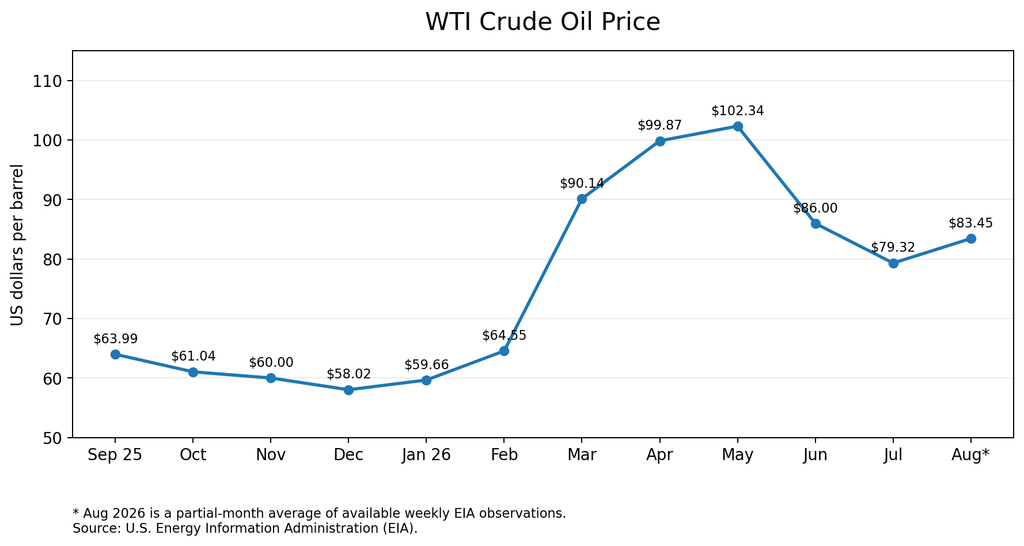
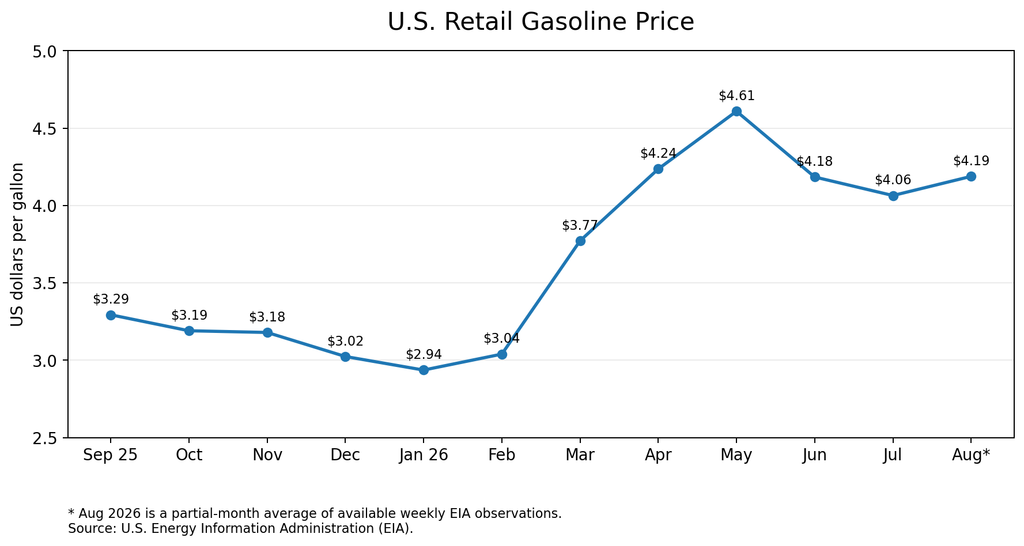
Crude oil and gasoline prices generally move in the same direction, but not always at the same speed. Refinery capacity, fuel inventories and distribution costs can influence how quickly changes in crude oil prices reach consumers at the pump.
U.S. gasoline prices are shown here as an example of how global oil-market shocks can reach consumers.
How Higher Fuel Prices Reach Consumers
For most people, the first impact is obvious: it costs more to fill the tank.
But the effect does not stop at the gas station.
Trucks deliver food to supermarkets. Ships transport goods between countries. Airlines need jet fuel, while farmers and construction companies rely heavily on fuel-powered machinery.
When fuel becomes more expensive, transportation and production costs rise. Eventually, some of those costs are passed on to consumers.
Higher fuel prices → Higher transportation costs → Higher everyday prices → More inflation pressure
That means rising fuel prices can affect even people who do not drive very much. The impact can gradually appear in grocery bills, delivery charges, airfares and other everyday expenses.
For households already facing high living costs, another rise in energy prices can put additional pressure on the family budget.
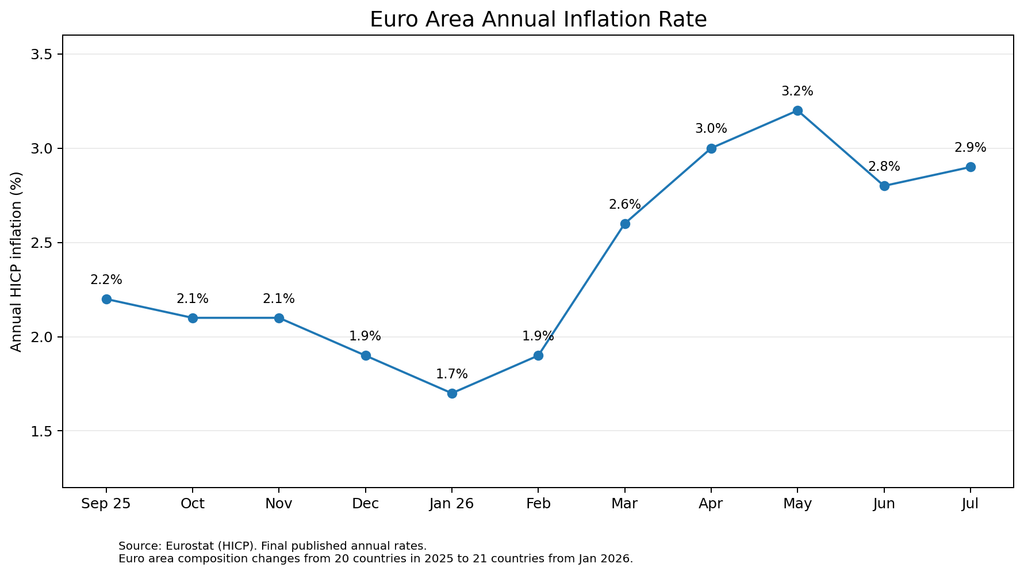
Euro-area inflation rose sharply in spring 2026, while higher energy costs added to broader price pressures. This shows how energy shocks can contribute to consumer inflation beyond the fuel pump.
What Happens Next?
Predicting gasoline prices is never easy, but three things are worth watching.
The first is geopolitical tension. If conflict eases and major shipping routes return to normal, pressure on oil prices could fall.
The second is refinery capacity. Even if crude oil becomes cheaper, gasoline prices may remain relatively high if refineries are damaged, disrupted or unable to produce enough fuel.
The third is global demand. High fuel prices can eventually reduce demand as consumers drive less and businesses cut fuel use. Slower economic growth can also reduce energy consumption.
These forces could eventually help bring prices down. But consumers should not expect gasoline prices to fall immediately just because crude oil prices decline.
For now, one point is worth remembering:
Higher gasoline prices don’t stop at the gas station. They gradually work their way into the cost of everyday life.
Sources
- International Energy Agency — Oil Market Report — August 2026
- U.S. Energy Information Administration — Gasoline Price Fluctuations
- Eurostat — Euro Area Annual Inflation — July 2026
☕ A Short Break
Enough numbers for today. Take a short break and enjoy a little music before you go.