
Every generation seems to believe that it is living through an unprecedented technological revolution.
Today, that technology is artificial intelligence. AI can write reports, translate languages, create images, analyze data, assist doctors, write computer code, and answer questions in seconds.
As these capabilities improve, an obvious question arises:
Will AI take our jobs?
The concern is understandable. But it is not a new question.
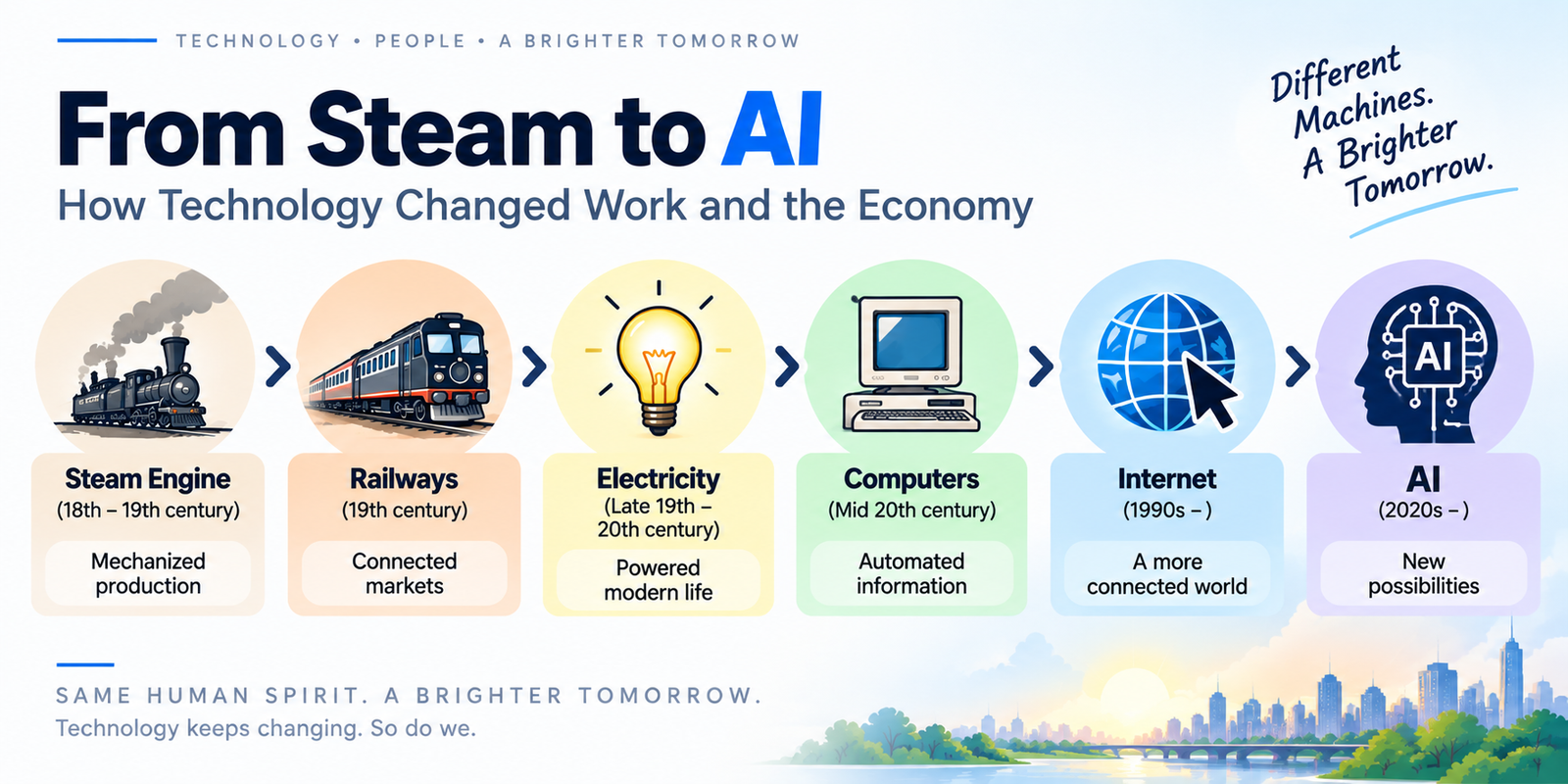
For more than two centuries, new technologies have repeatedly disrupted the way people work. Steam engines replaced human and animal power. Railways transformed transportation. Electricity reorganized factories and cities. Computers automated office work. The internet changed communication, shopping, banking, and media.
Each revolution destroyed some jobs, transformed many others, and created occupations that previous generations could hardly have imagined.
Looking at this history may help us understand what AI could mean for our economic future.
1. The Steam Engine: When Machines Multiplied Human Power
The Industrial Revolution began in Britain in the late 18th century and gradually spread around the world.
Before industrialization, most people worked in agriculture or small workshops. Production depended heavily on human labor, animals, wind, and water.
The steam engine changed this relationship.
Factories could operate machinery on a scale that individual workers could never match. Textile production expanded rapidly, mines became more productive, and manufacturing increasingly moved from homes and small workshops into large factories.
This created enormous economic gains—but also social disruption.
Traditional craftspeople sometimes found that machines could produce goods faster and more cheaply. Factory work could be repetitive, dangerous, and poorly paid. Cities expanded faster than housing and public services could accommodate them.
Yet industrialization eventually produced something much larger than the factories themselves.
It created new industries, new cities, new transportation systems, and millions of new jobs.
Technology does not simply eliminate work. It changes what kinds of work have economic value.
2. Railways: Making Distance Economically Smaller
During the 19th century, railways transformed economies again.
Before railways, moving people and goods over long distances was slow and expensive. A factory might be able to produce large quantities of goods, but those goods were valuable only if they could reach customers.
Railways dramatically reduced this problem.
Farmers gained access to distant markets. Manufacturers could distribute products across entire countries. Cities could receive food and raw materials from much farther away.
Railways also created their own economic ecosystem: steel production, engineering, construction, stations, maintenance, finance, logistics, and new towns along transportation routes.
This illustrates another recurring pattern in technological change:
A major innovation often becomes more important because of the industries that grow around it.
The same pattern would later appear with electricity, automobiles, computers, the internet—and perhaps AI.
3. Electricity: A Technology That Changed Almost Everything
Electricity was different from many earlier inventions because it was not limited to one industry.
Factories could replace centralized steam-powered machinery with electric motors. Homes gained lighting and appliances. Cities developed electric transport systems. Communications improved. New industries emerged around electrical equipment.
But productivity did not rise instantly.
Businesses first had to redesign factories, reorganize production, invest in new equipment, and teach workers new skills.
This provides an important lesson for today’s AI debate.
Inventing a powerful technology and receiving its full economic benefit are not the same thing.
Companies need time to learn how to use a general-purpose technology effectively.
AI may follow a similar pattern. Installing an AI system can be relatively easy. Reorganizing an entire business around AI may take years.
4. Computers: Automation Moves Into the Office
By the second half of the 20th century, technological change was no longer mainly about physical power.
It increasingly involved information.
Computers transformed accounting, banking, engineering, manufacturing, government, science, and administration.
Many repetitive calculations and clerical tasks that once required large numbers of employees could be completed much faster.
This created fears about unemployment.
But computers also created entirely new occupations: software developers, IT technicians, database administrators, semiconductor engineers, cybersecurity specialists, and many others.
Even traditional professions changed.
An accountant using spreadsheets and accounting software could process information far faster than an accountant working entirely with paper ledgers.
The profession did not disappear. The tools—and therefore the skills expected from workers—changed.
This distinction is particularly important when thinking about AI.
5. The Internet: Connecting Billions of People
The internet produced another dramatic change.
Its great economic contribution was not simply faster computers. It connected computers—and eventually billions of people.
Communication costs collapsed.
A small company could reach customers overseas. Consumers could compare prices instantly. Banking moved online. Newspapers lost classified advertising. Travel agents faced online booking platforms. Retailers faced e-commerce competition.
At the same time, entirely new businesses appeared: search engines, social networks, online marketplaces, streaming services, digital advertising, cloud computing, and app-based services.
Once again, technology created winners and losers.
And once again, predicting the winners in advance was extremely difficult.
Someone looking at the early internet in the 1990s might have understood that communication would become easier. Predicting YouTube, smartphones, social media influencers, cloud computing, or today’s digital economy would have been much harder.
That should make us cautious when predicting exactly what AI will do twenty years from now.
6. AI: A Different Kind of Machine
Artificial intelligence continues this long history—but there is an important difference.
Earlier machines mainly replaced or enhanced physical effort. Computers automated calculations and structured information processing.
AI can increasingly assist with tasks that we associate with human cognitive ability.
It can summarize documents, generate text, recognize images, translate languages, analyze complex information, create software code, and communicate in natural language.
That means AI can affect not only factory workers or routine clerical workers, but also accountants, lawyers, programmers, designers, teachers, doctors, managers, and other professionals.
However, this does not necessarily mean that these professions will disappear.
A better question may be:
Which tasks within each profession will AI perform, and which tasks will remain primarily human?
An accountant, for example, performs many different activities: entering data, checking transactions, interpreting tax rules, communicating with clients, identifying unusual situations, exercising professional judgment, and taking responsibility for advice.
AI may automate some of those tasks much more easily than others.
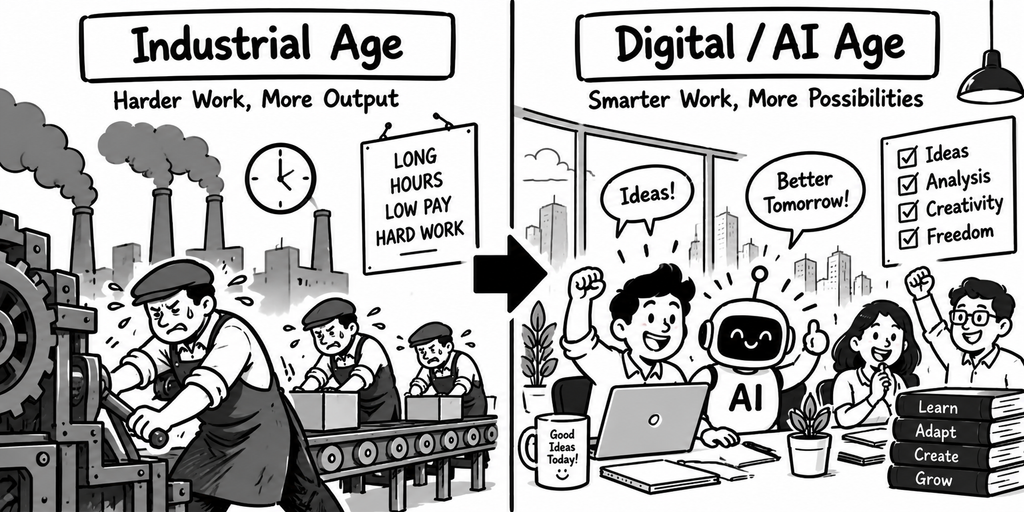
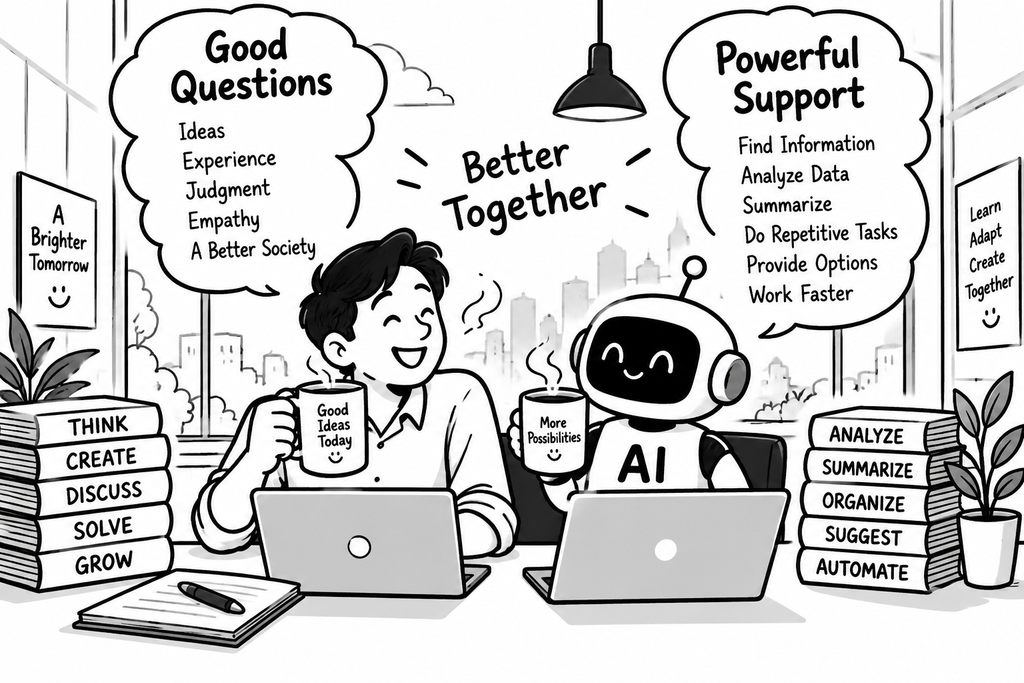
So the future of work may involve fewer completely automated occupations and many more AI-assisted occupations.
7. Will AI Destroy More Jobs Than It Creates?
No one can answer this confidently yet.
History gives us reasons for both optimism and caution.
Past technological revolutions ultimately increased productivity and created new economic opportunities. But the benefits were not distributed equally, and adjustment could be painful.
A worker whose occupation disappears cannot simply be told that technology will eventually create other jobs somewhere else.
The transition matters.
AI may increase the productivity of highly skilled workers while reducing demand for some routine office jobs. It may create new industries while weakening existing ones. Some workers may adapt quickly; others may need retraining.
Education systems, businesses, and governments therefore face an important challenge: helping people move from tasks that machines perform well toward work where human capabilities remain valuable.
8. What Will Become More Valuable in the AI Age?
If AI makes information easier and cheaper to produce, uniquely human qualities may become more—not less—important.
Judgment matters when information is uncertain.
Trust matters when decisions affect people’s money, health, careers, or families.
Creativity matters when there is no single correct answer.
Communication matters when people need explanation rather than simply information.
Responsibility matters because somebody must ultimately stand behind an important decision.
AI may therefore reduce the value of some routine knowledge while increasing the value of knowing how to use knowledge wisely.
That could change education as well.
Memorizing information may become less important than asking good questions, evaluating evidence, recognizing errors, communicating clearly, and making sound judgments.
9. AI Is Part of a Much Longer Story
When we look from the steam engine to AI, one pattern becomes clear.
Steam multiplied physical power.
Railways reduced the economic importance of distance.
Electricity transformed production and everyday life.
Computers automated information processing.
The internet connected people and markets.
AI is beginning to expand our ability to process and create knowledge.
Each revolution initially produced uncertainty because people could see the jobs being threatened more easily than the jobs that had not yet been invented.
AI may follow that historical pattern—but we should not assume that history will repeat itself perfectly.
Its speed, reach, and ability to perform cognitive tasks could make this transition unusually powerful.
The central economic question, therefore, may not be whether AI will replace humans.
It may be:
How will humans, businesses, and societies learn to work with increasingly capable machines?
Technology has always changed the tools we use.
It has also changed the skills we value.
From the steam engine to artificial intelligence, the people and societies that adapted successfully were rarely those that tried to stop technological change. They were those that learned how to use new technology while developing new skills, institutions, and opportunities around it.
AI is still at the beginning of that story.
And just as people living at the beginning of the Industrial Revolution could not imagine today’s economy, we may only be seeing the first outline of the economy that AI will eventually create.
Sources
- OECD — Skills in the AI Age
- International Labour Organization — Generative AI and Jobs: A 2025 Update
- World Economic Forum — The Future of Jobs Report 2025

A Moment to Pause
After two centuries of technological change, perhaps the best way to look ahead is with a little perspective—and a little music.